We are currently initiating pilot operations at methane leak sites under a number of different circumstances. If your needs meet any of these requirements please contact us and we would be willing to test pilot operations with you at low or even no cost.
Landfill
Landfills generate significant amount of methane due to anaerobic digestion of organic waste. While some of this can be easily burned off if it is above the combustible concentration limit if it is below this level or is more diffusely leaking remediation can be more difficult. We can offer bioreactors for distinct methane sources and lay down microbial seeded soil mats for more diffuse methane sources.

Municipal
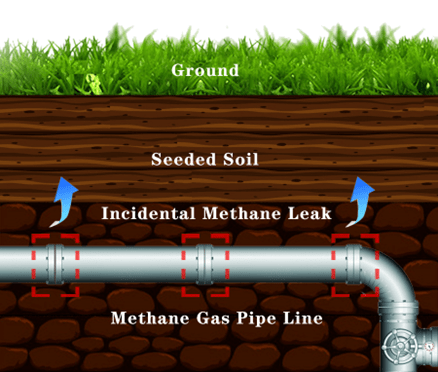
Municipalities deal with methane in a few ways. There are numerous natural gas distribution networks and pipelines which may cause incidental leakage for which we can put down a barrier of methane digesting bacteria to prevent methane escape into the atmosphere.
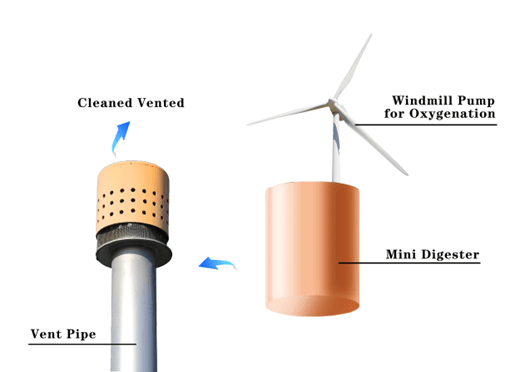
Due to the built space preventing methane from the natural decomposition of biological waste from being released directly from the soil many of these streams are concentrated into pipes and vented in the air. These low level streams can have small bioreactors retrofitted on them to allow cities to adopt a significantly greener profile.
Mine Site
Mine sites often release significant streams of methane due disturbance from where the methane is naturally contained underground. Some of these can be burned off, but many are below combustible limits and provide a significant challenge in dealing with. Additionally many abandoned mines sites that are leaking methane are in inaccessible areas. A solution to dealing with these leaks would be the placement of small transportable reactors into these areas that require minimal human intervention. If a larger scale leak is on site then a larger open system can be installed.
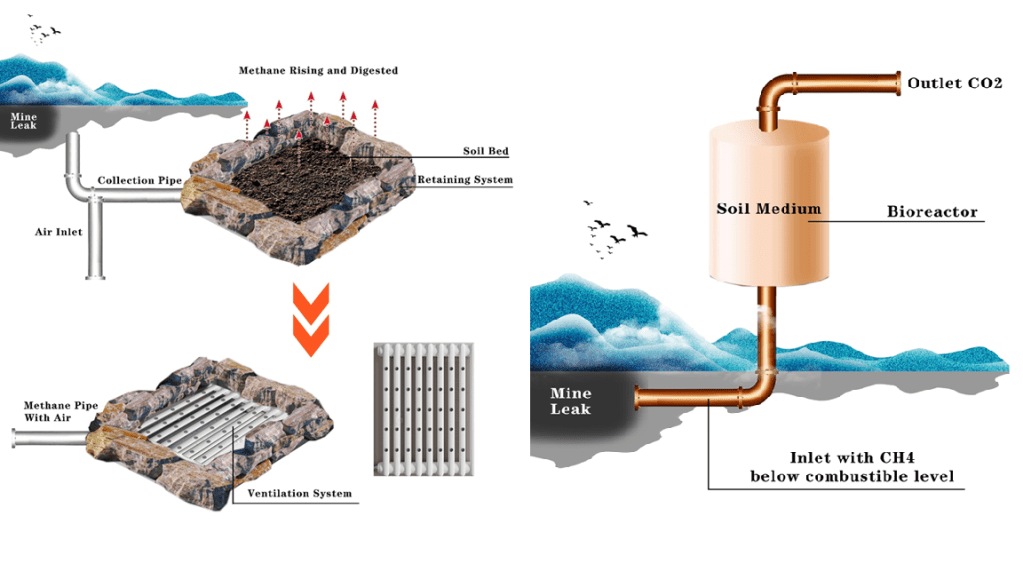
The benefit of using methanotrophs to remediate methane leaks is that they function independently and thus can be deployed at remote abandoned mine sites. They also do not represent a fire hazard in the same way that a flare does.
Agricultural
Agricultural operations with animals presents a significant source of methane release into the environment. Feedlot and dairy barn sites can be retrofitted with ventilation systems that pipe methane generated by animals through bioreactors which digest the methane before release. Manure waste that is decomposed can be collected and covered with a microbial mat or mixed in an aeration system to break down into denser fertilizer for reuse. Finally microbes can be deployed to rice paddies or other significant sources of methane to digest the gas as it is released.
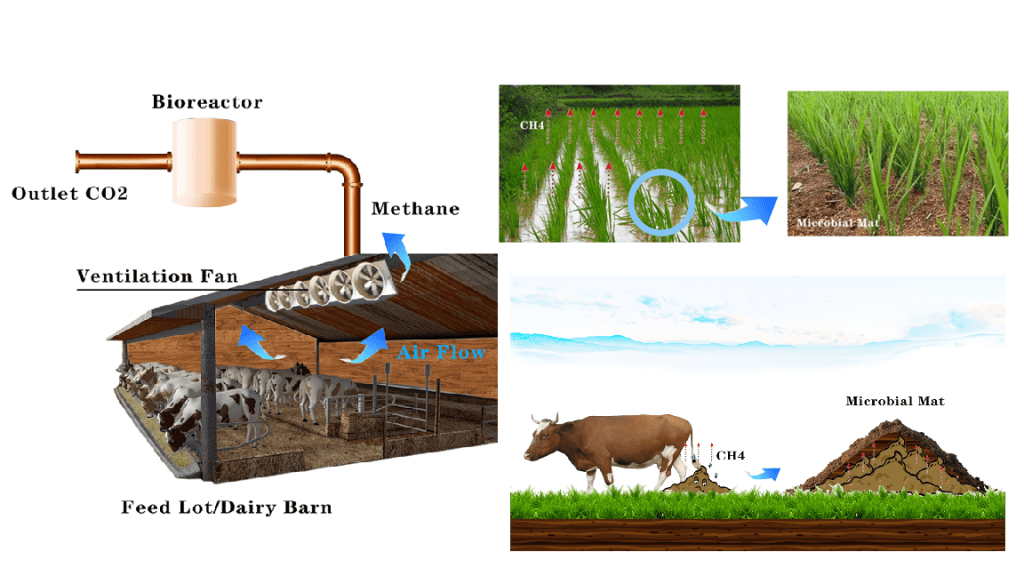
The benefit of all of these operational types in relation to agriculture is that the nitrogen fixing capability of methanotrophs can be utilized to enrich soils or by products of these operations.
Oil and Gas
Oil and gas operations presents a large leakage concern for methane. The tapping and transportation of natural gas can present many low level incidental leakage site which can be remediated through the strategic placement of methanotrophic bacteria.
Fracking as an operation also tends to release methane in a very diffuse way where it leaks up through the soil. Placement of microbial soil mats in the leak areas can prevent this methane from reaching the atmosphere.

Natural Gas processing facilities also represent significant sources of leakage for methane. If these facilities are ventilated the existed ventilation system can be utilized to divert the leaked methane to water methanotrophic reactors that leverage the solubility of methane in water to strip it out and digest it. If a ventilation system is not already existing individual collection fans can be installed at significant sources of leakage such as pressure release valves.
 CH4 Microbial Solutions